 Image 1 of 4
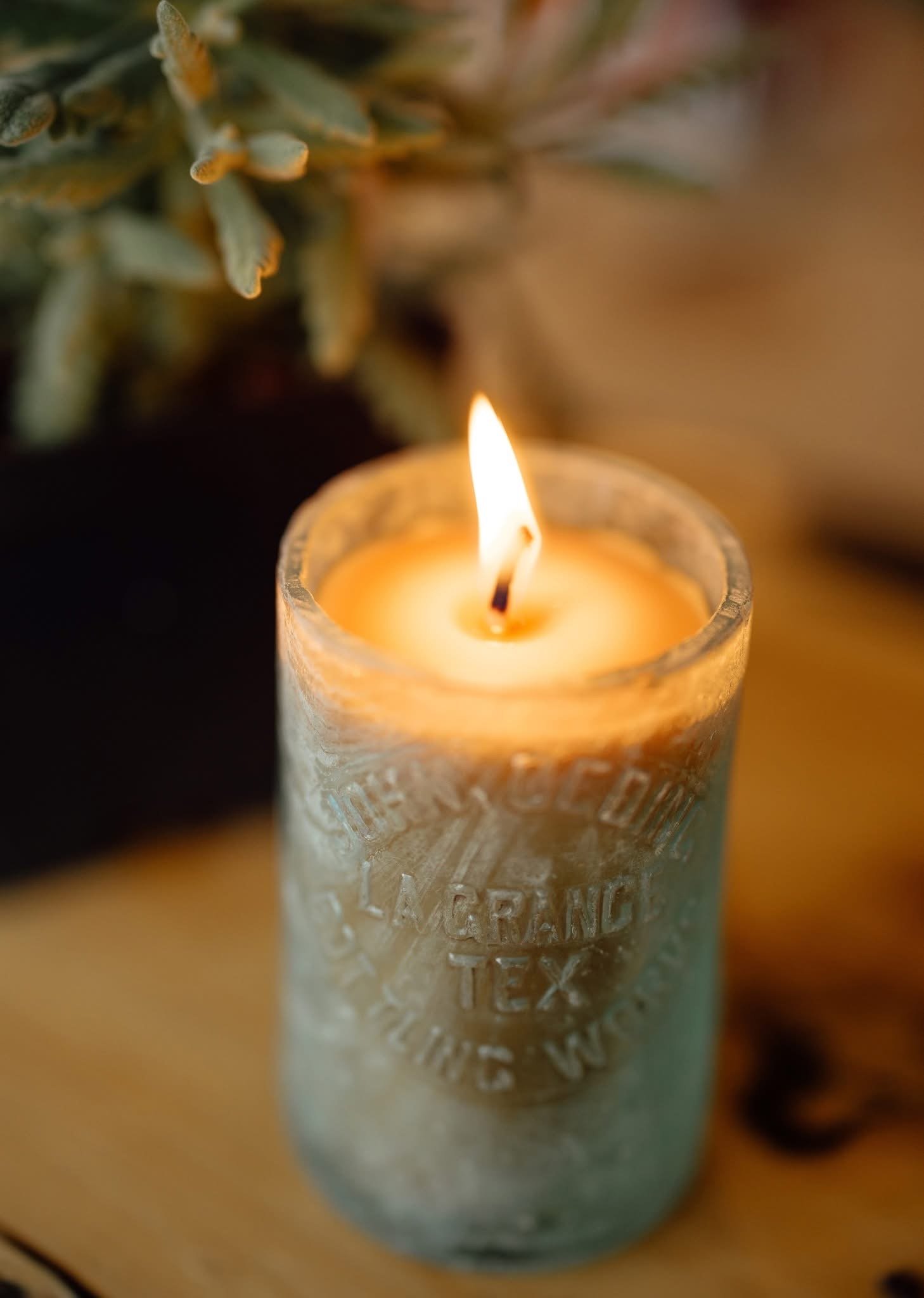 Image 2 of 4
 Image 3 of 4
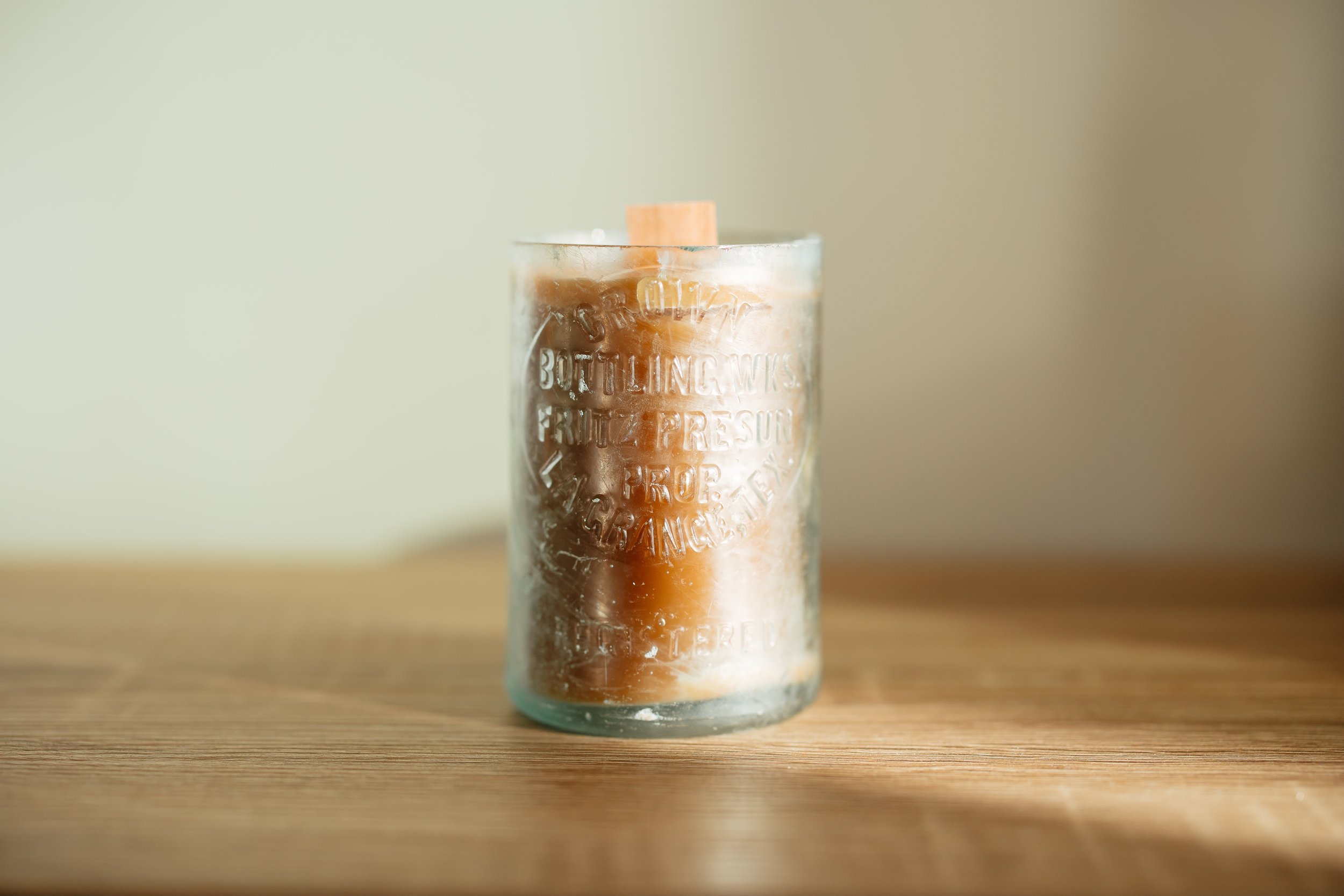 Image 4 of 4
ORIGINS OF VINTAGE BOTTLES
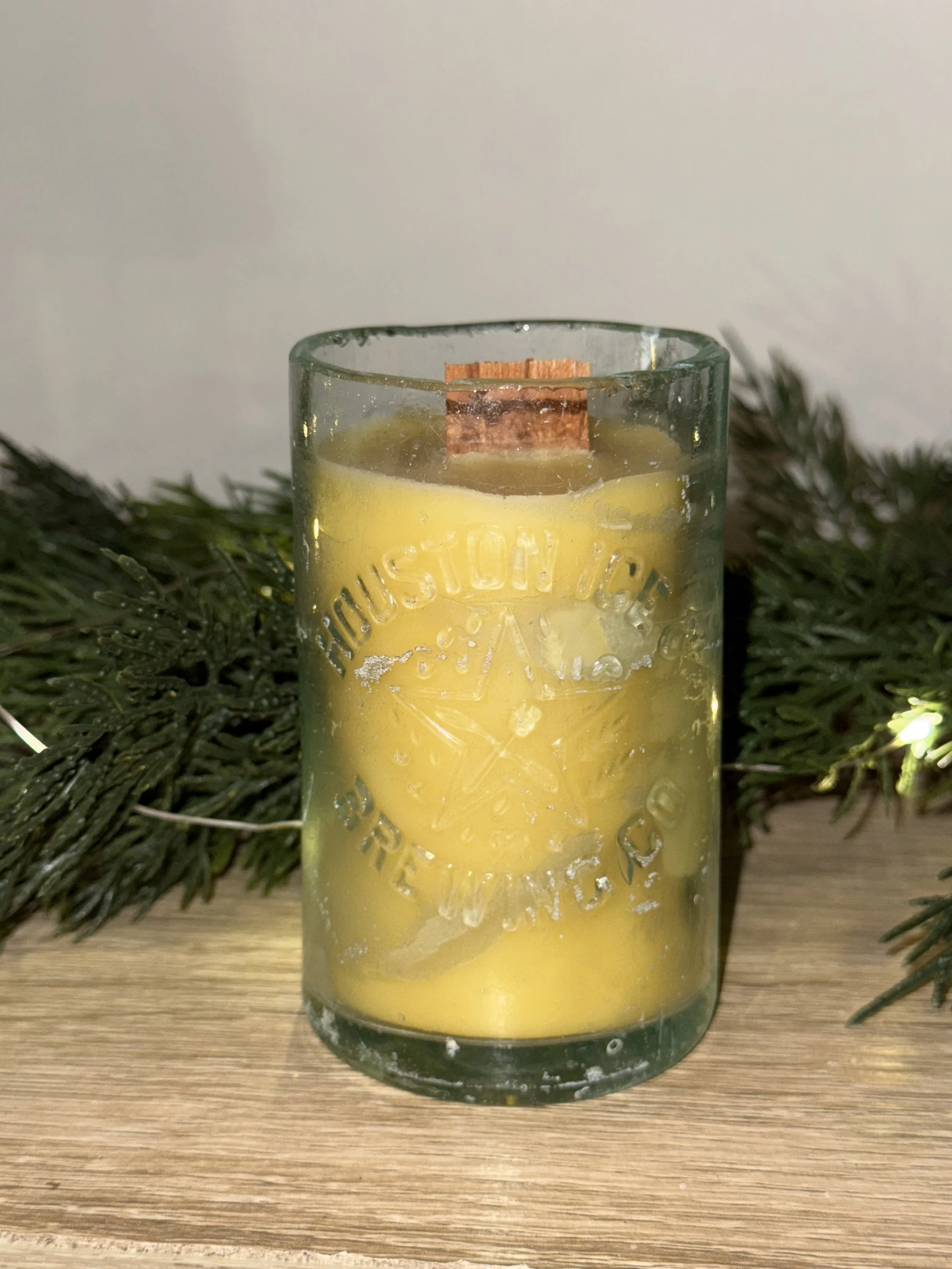
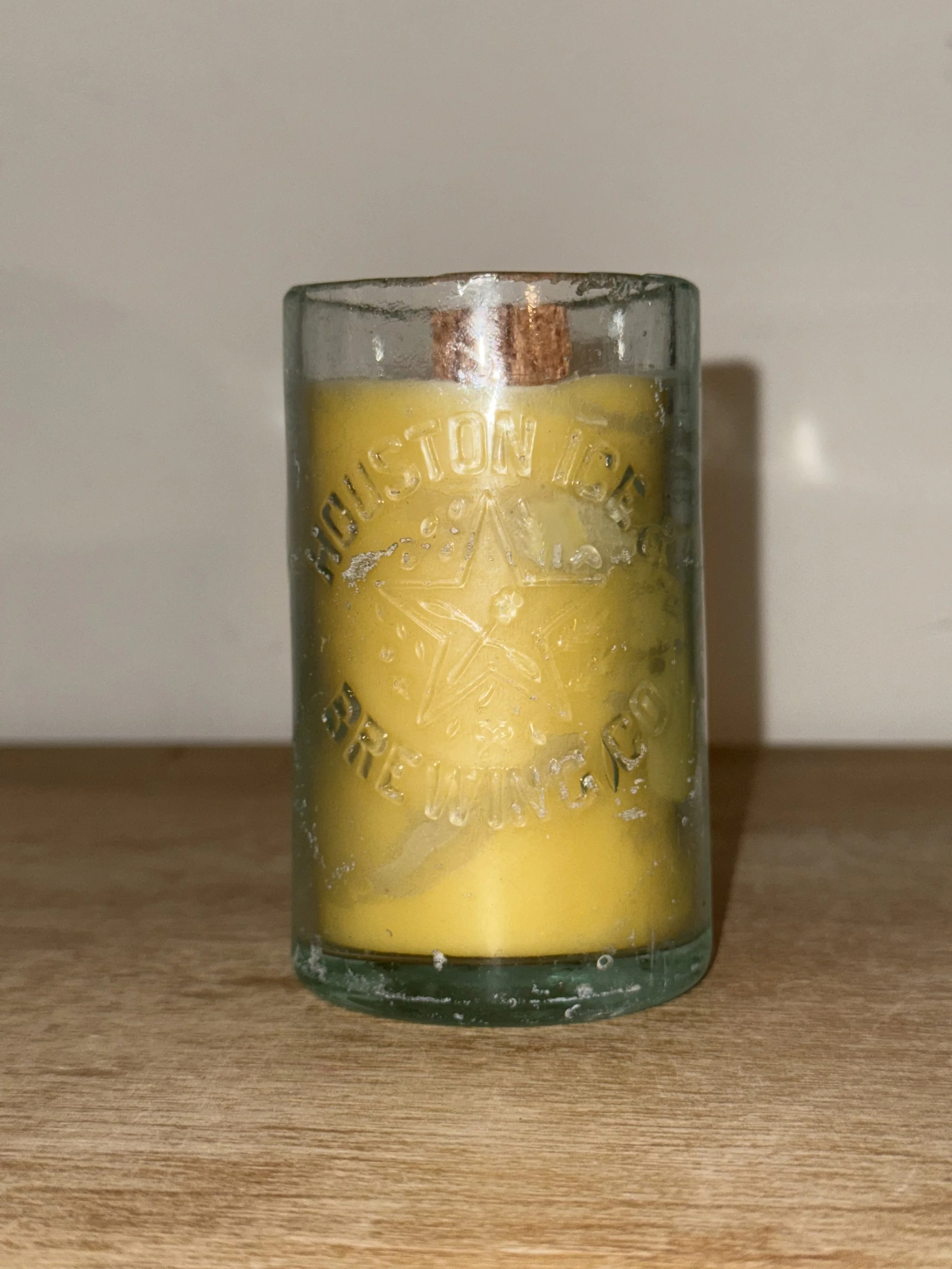
Bottle A1- QTY 1- Houston Ice- Manufactured by S B & G Co
The Houston Ice & Brewing Company, better known through its Magnolia Brewery brand, is a foundational part of Houston's industrial and cultural history.
Here is a deeper look into the company:
The Merger of Ice and Beer
The company's full name tells its unique story. Before modern refrigeration, brewing lager year-round, especially in a place like Houston, required massive amounts of artificial ice.
Founder: The company was founded by Hugh Hamilton, an entrepreneur who was already successful in the ice-manufacturing business.
Founding: The Houston Ice & Brewing Association was incorporated in 1887, with the main brewery (Magnolia Brewery) established in 1892.
Scale: By the turn of the century, the operation was huge, encompassing over twenty acres north and south of the Buffalo Bayou and consisting of many buildings. It became one of Houston's most substantial and profitable businesses. At its peak, it was producing 100 tons of ice and up to 200,000 barrels of beer annually, making it one of the largest breweries in the South.
Famous Brands and World Recognition
The brewery produced several signature brands, with one gaining global fame:
Southern Select: This was arguably their most famous beer. In 1913, their brewmaster, Frantz Brogniez from Belgium, won the Grand Prize at the International Conference of Breweries in Ghent, Belgium, beating out over 4,000 competing brewers. This catapulted the brewery's reputation.
Other Brands: They also produced Magnolia Beer, Richelieu, and Hiawatha.
The Bottle: The glass you have, with the star, is strongly associated with the Magnolia brand, which was often sold in generic bottles but also in embossed "splits" (smaller bottles) between about 1910 and 1918.
The Impact of Prohibition
Prohibition was a disaster that marked the beginning of the end for the company:
Pivot: In 1918 (when Texas state prohibition began) and 1920 (national prohibition), the company was forced to stop brewing beer. It changed its name to Houston Ice & Cold Storage and focused on ice manufacturing and cold storage. They even attempted a venture into dairy products, making Magnolia Brand Butter.
Struggle and Closure: While they attempted to reopen after the repeal of Prohibition in 1934, they struggled to regain their former market dominance. The company eventually closed its doors for good in 1950.
Surviving Legacy
Today, two structures from the massive original complex remain, most notably:
The Magnolia Brewery Building: Located at 715 Franklin Avenue, this four-story Italianate structure now houses the Historic Magnolia Ballroom. It once served as the taproom and executive offices and is a City of Houston Protected Landmark and listed on the National Register of Historic Places.
This glass you have is a tangible connection to this incredibly rich period of Houston's pre-Prohibition history!
The Manufacturer
The manufacturer of the original bottle is the Streator Bottle & Glass Company (S B & G Co.).
Location: Streator, Illinois, USA.
Specialty: They were a major and successful glass house, specializing primarily in beer bottles, but also making other containers like soda and liquor bottles.
The Mark: The "SB&GCo" mark is the only known logo used by the company during its entire operational life.
The Date Range
The operational dates of the Streator Bottle & Glass Company give us a very precise window for your bottle's manufacture:
Bottle Date Range: 1881 - 1905
The company was incorporated in 1881.
It ceased to exist as an independent entity in 1905, when it merged with other glass houses to form the American Bottle Company.
This places your bottle firmly in the late Victorian/early Edwardian era and the very first chapter of the Houston Ice & Brewing Company's (HI&B Co.) history (which was founded in 1887, with brewing starting around 1892).
In short, you are holding a piece of glass made between 1881 and 1905 in Streator, Illinois, for the Houston Ice & Brewing Company, likely as one of their earliest beer bottles!
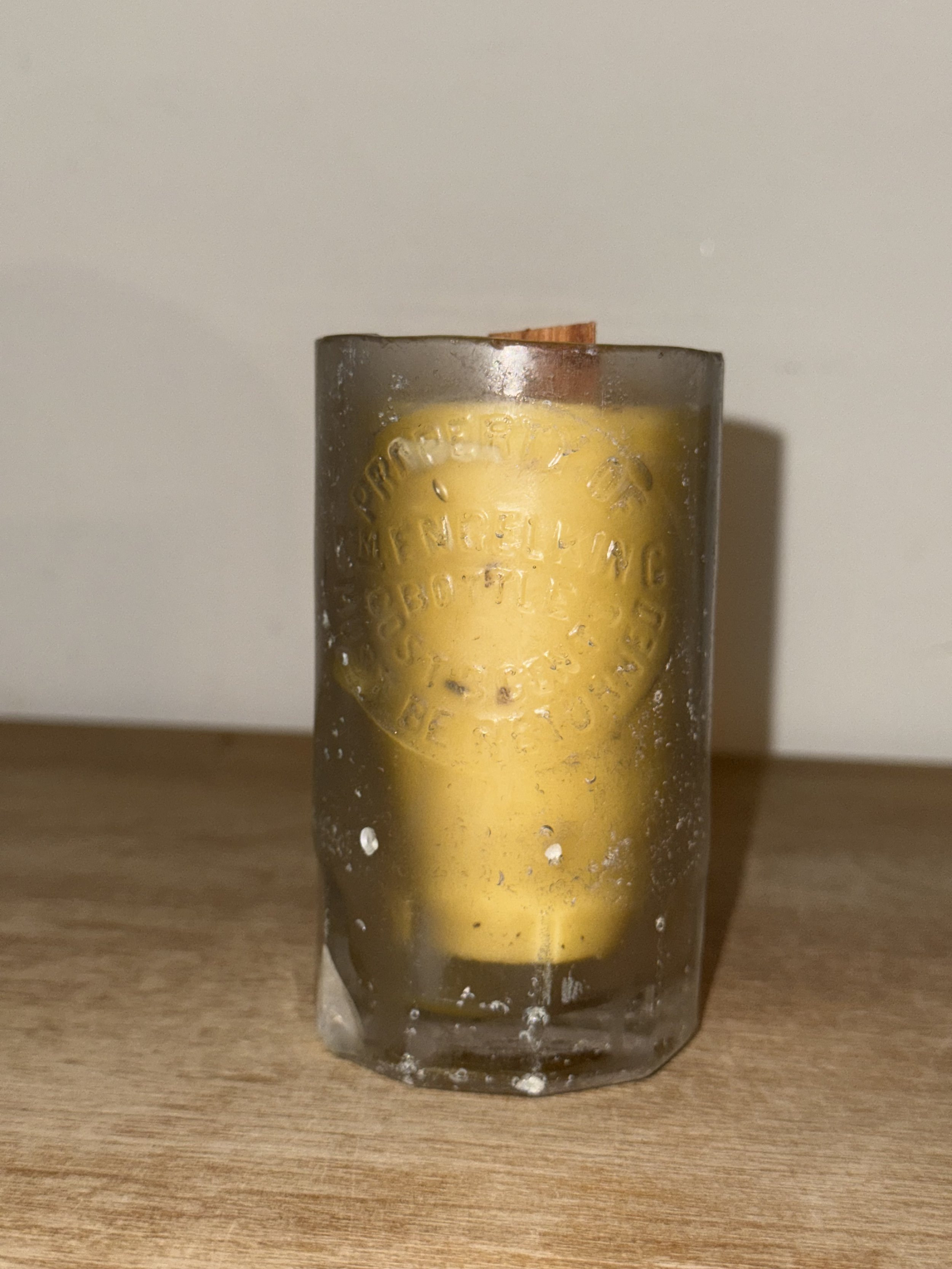
Bottle A2- William (W. M.) Engelking from Hallettsville, Texas - Mug Base
Historical Context
Proprietor: William (W. M.) Engelking was a known businessman and bottler in Hallettsville, Texas.
The Business: The W. M. Engelking Bottling Works would have been a local operation that bottled carbonated soft drinks, mineral waters, and possibly other beverages. In a town like Hallettsville, which grew significantly after the railroad arrived in 1887, local bottling works were vital for providing refreshing drinks.
Beverage Type: These bottles are typically for soda pop or mineral water, often referred to as "soda and mineral water bottles."
Property Clause: The phrase "PROPERTY OF..." is extremely common on these early bottles. It indicates that the value of the glass was significant, and the company expected customers to return the bottles to be washed, sterilized, and refilled. This practice was essential before disposable bottles became the norm.
Dating the Bottle
The general style of the bottle (heavy, embossed glass with a "Property of" clause) combined with the historical presence of independent bottlers in Texas suggests a date range:
Estimated Date Range: 1900s – 1915
This period covers the peak era of independent local bottling works in Texas towns before major national brands began to consolidate the industry.
A3 Bottle- Smaller applied color label Sauce bottle- 1945
Bulliard's Evangeline "Red Hot Sauce" bottle.
The Brand: Bulliard's Evangeline
This bottle comes from Edmond (Ed) Bulliard of St. Martinville, Louisiana.
Origin: Ed Bulliard began commercially bottling his sauce in 1910, making it one of the earliest Louisiana hot sauces.
The Name: He chose the name "Evangeline" as a tribute to the famous Longfellow poem and the local Acadian heroine. St. Martinville is home to the "Evangeline Oak" (which appears to be the tree depicted on the label).
The Rivalry: Bulliard’s was a major competitor to Tabasco (McIlhenny Co.), located nearby on Avery Island. The two families actually had legal battles over the use of the word "Tabasco."
Notice how the bottle carefully says "Cayenne Peppers" and "Louisiana Red Hot Sauce"instead of "Tabasco Sauce." This was likely a deliberate move to distinguish the product and avoid trademark infringement after those legal disputes.
The "Painted Label" (ACL)
This bottle features an Applied Color Label (ACL)—essentially a painted label fired onto the glass.
Era: This technology became popular in the beverage industry around 1934. The red and white two-tone design is classic for this era.
"Put Up On Our Farm": The slogan on the back highlights that the Bulliard family grew their own cayenne peppers locally in St. Martinville, an early version of the "farm-to-table" concept.
Dating the Bottle
We can date this bottle very accurately using the maker's mark on the bottom (Image 3) and the label style.
Duraglas" (The Script):
Owens-Illinois only introduced the "Duraglas" trademark/process in 1940.
The Logo (Diamond + Oval + I):
The logo on the bottom (an 'I' inside an oval, on top of a diamond) was used until roughly 1954. After 1954, they removed the diamond and just used the 'I' in an oval.
The Number "5":
Since we know it must be after 1940 (due to "Duraglas") but before 1954 (due to the logo), the single digit 5 stands for 1945.
Legacy
The Bulliard family is still a massive name in the hot sauce industry today!
Different branches of the family went on to found Cajun Chef (popular for their green hot sauce and spicy beans) and Peppers Unlimited, which still operates in St. Martinville.
This bottle is a genuine WWII-era artifact, likely manufactured just as the war was ending. It held Bulliard's hot sauce that was "put up on the farm" in St. Martinville, Louisiana, during the mid-1940s. And is of one of the original Cajun hot sauces, made by the Bulliard family in St. Martinville, LA. It was likely used on a table for gumbo or oysters before being upcycled into a candle!
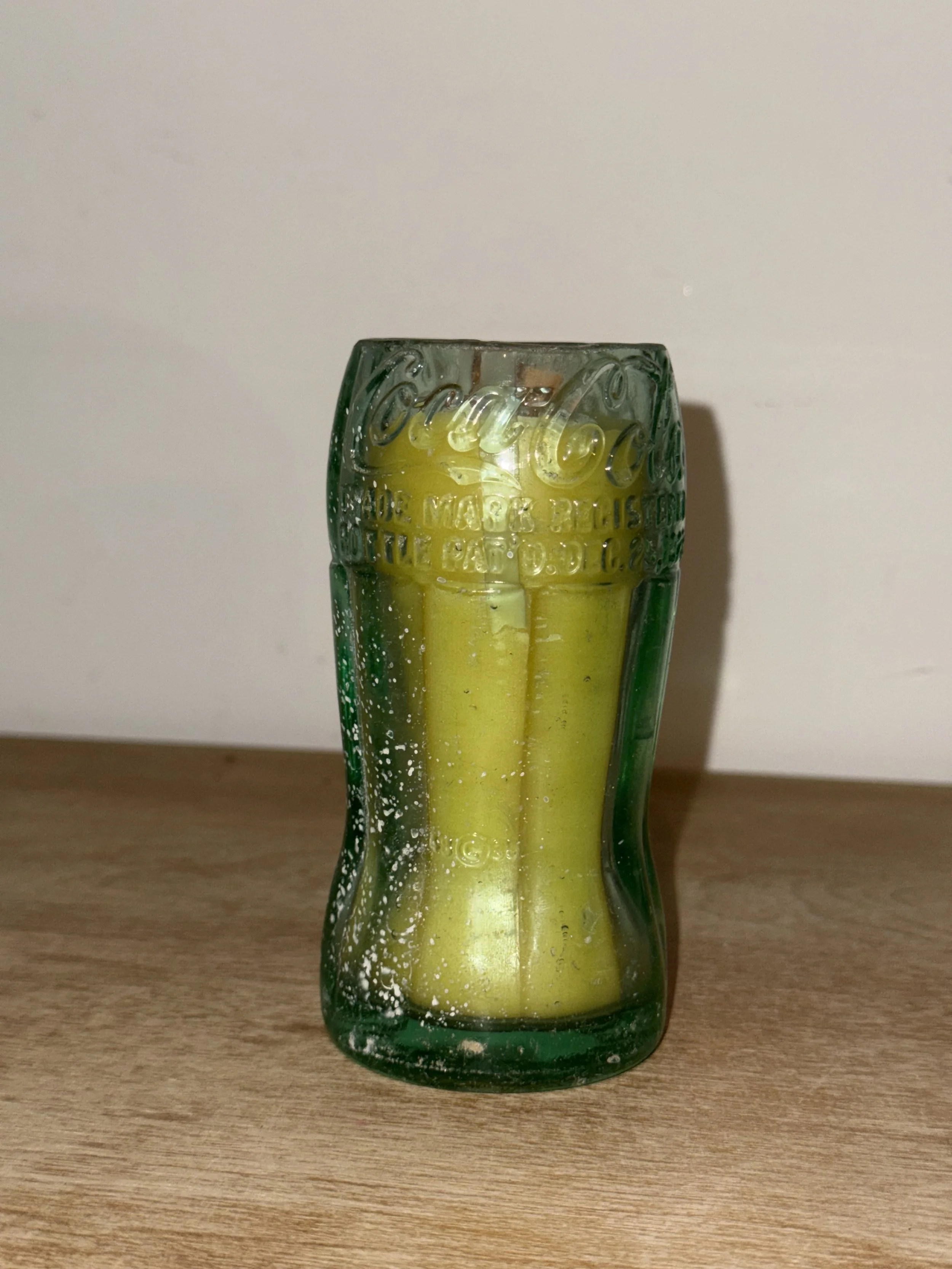
B4- QTY 8 (I think) HobbleSkirt- Christmas coke- 1923 Pat- Caldwell Texas
This is perhaps the most iconic American bottle design of all time. A genuine "Christmas Coke" bottle from Caldwell, Texas.
Here is the story behind this specific bottle and why collectors love them:
Why is it called a "Christmas Coke"?
Collectors call this the "Christmas Coke" because of the patent date embossed on the side: "DEC. 25, 1923."
The Patent: The original design for the contour "hobbleskirt" bottle was patented in 1915. When that patent was about to expire, the Coca-Cola Company renewed it. The renewal was granted on Christmas Day, 1923.
The Design: This bottle features the classic "Hobbleskirt" or contour shape, which was designed so you could recognize a Coke bottle in the dark just by touch, or even if it was broken on the ground.
Dating Your Bottle (It wasn't made in 1923!)
Even though the bottle says "1923," it was almost certainly manufactured later.
Production Years: Bottles with the "1923" patent date were actually produced between 1928 and 1938. Before 1928, the bottles carried the "Nov. 16, 1915" patent date.
The Replacement: In 1938, the mold was changed to read "PAT. D-105529," so your bottle definitely predates 1938.
Summary: This bottle was likely filled with Coca-Cola in Caldwell sometime during the Great Depression (1928–1938).
The Caldwell, Texas Connection
The city name on the bottom—CALDWELL, TEX—
Small Town Rarity: Caldwell is a small town (the county seat of Burleson County). Bottles from small-town bottling plants are often harder to find than those from major cities like Houston or Dallas because fewer of them were made.
The Plant: Local bottling works were community staples. In the 1920s and 30s, the "Coca-Cola Bottling Company" in a town like Caldwell would have been a locally owned franchise, washing and refilling these heavy glass bottles over and over again for the local area.
Timeline: The Caldwell plant was one of hundreds of small, independent bottling franchises established across Texas starting in the early 1900s. The town's access to the railway would have been critical for receiving the syrup, empty bottles, and bottling machinery.
Ownership Model: The parent Coca-Cola Company (in Atlanta) sold concentrated syrup to local, independent businessmen who owned the bottling plants. These local owners had the exclusive right to bottle and distribute Coke within a specific territory around Caldwell (Burleson County and parts of surrounding counties).
The Process:
The local owner received the syrup in wooden barrels or cans.
They mixed the syrup with treated, carbonated local water.
The bottles—like the "Christmas Coke" contour you have—were washed, sterilized, filled, capped, and then sent out for distribution via horse-drawn wagon or early trucks.
The Bottle's Role: Since the bottles were so expensive, they were meant to be returned and reused dozens of times. The embossing of CALDWELL, TEX on the base served as a clear marker for route drivers to easily sort and return the empty bottles to the correct plant for reuse.
Impact on Caldwell
During the Great Depression (when your 1928-1938 bottle was being produced), the Caldwell Bottling Company was an economic anchor:
Local Jobs: It provided stable local employment for route drivers, fillers, washers, and sorters.
Local Distribution: It was a crucial part of the local economy, distributing to general stores, drug stores, soda fountains, and local dance halls.
The End of the Small-Town Plant
Caldwell's plant, like many small-town operations, eventually succumbed to modernization and consolidation:
Post-WWII Changes: After World War II, distribution networks improved, and the cost of maintaining small, manual bottling lines became less competitive.
Consolidation: Over the 1950s and 60s, the smaller franchises like Caldwell were bought out and consolidated into larger, regional bottling plants located in bigger cities like Waco or College Station/Bryan.
The Bottle's Fate: Once the Caldwell plant closed or merged, their unique embossed bottles were either destroyed, sold off for scrap, or simply ended up in dumps (which is where this one was found!) —which is why the ones that survived are now treasured by collectors.
This bottle represents a time when Caldwell, TX, was a completely self-sufficient hub for its local economy!
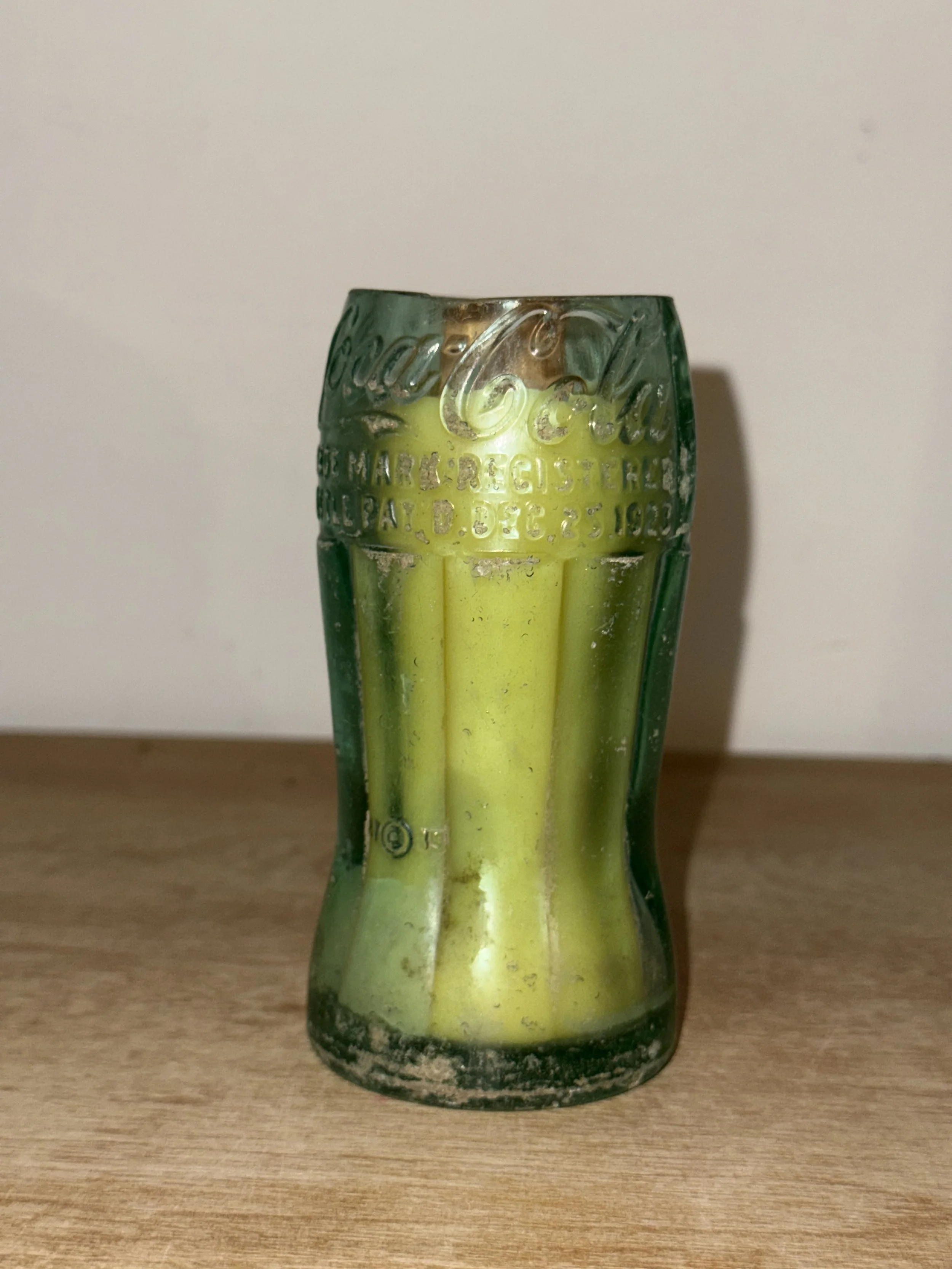
B5- HobbleSkirt- Christmas coke- 1923 Pat- Huntsville Texas
This is perhaps the most iconic American bottle design of all time. A genuine "Christmas Coke" bottle from Huntsville, Texas.
Here is the story behind this specific bottle and why collectors love them:
Why is it called a "Christmas Coke"?
Collectors call this the "Christmas Coke" because of the patent date embossed on the side: "DEC. 25, 1923."
The Patent: The original design for the contour "hobbleskirt" bottle was patented in 1915. When that patent was about to expire, the Coca-Cola Company renewed it. The renewal was granted on Christmas Day, 1923.
The Design: This bottle features the classic "Hobbleskirt" or contour shape, which was designed so you could recognize a Coke bottle in the dark just by touch, or even if it was broken on the ground.
Dating Your Bottle (It wasn't made in 1923!)
Even though the bottle says "1923," it was almost certainly manufactured later.
Production Years: Bottles with the "1923" patent date were actually produced between 1928 and 1938. Before 1928, the bottles carried the "Nov. 16, 1915" patent date.
The Replacement: In 1938, the mold was changed to read "PAT. D-105529," so your bottle definitely predates 1938.
Summary: This bottle was likely filled with Coca-Cola in Huntsville sometime during the Great Depression (1928–1938).
The Huntsville, Texas Connection
The city name on the bottom— Huntsville, TEX—
Small Town Rarity: Bottles from small-town bottling plants are often harder to find than those from major cities like Houston or Dallas because fewer of them were made.
The Plant: Local bottling works were community staples. In the 1920s and 30s, the "Coca-Cola Bottling Company" in a town like Huntsville would have been a locally owned franchise, washing and refilling these heavy glass bottles over and over again for the local area.
Timeline: The Huntsville plant was one of hundreds of small, independent bottling franchises established across Texas starting in the early 1900s. The town's access to the railway would have been critical for receiving the syrup, empty bottles, and bottling machinery.
Ownership Model: The parent Coca-Cola Company (in Atlanta) sold concentrated syrup to local, independent businessmen who owned the bottling plants. These local owners had the exclusive right to bottle and distribute Coke within a specific territory around Huntsville ( and parts of surrounding counties).
The Process:
The local owner received the syrup in wooden barrels or cans.
They mixed the syrup with treated, carbonated local water.
The bottles—like the "Christmas Coke" contour you have—were washed, sterilized, filled, capped, and then sent out for distribution via horse-drawn wagon or early trucks.
The Bottle's Role: Since the bottles were so expensive, they were meant to be returned and reused dozens of times. The embossing of Huntsville , TEX on the base served as a clear marker for route drivers to easily sort and return the empty bottles to the correct plant for reuse.
Impact on Huntsville
During the Great Depression (when your 1928-1938 bottle was being produced), the Huntsville Bottling Company was an economic anchor:
Local Jobs: It provided stable local employment for route drivers, fillers, washers, and sorters.
Local Distribution: It was a crucial part of the local economy, distributing to general stores, drug stores, soda fountains, and local dance halls.
The End of the Small-Town Plant
Huntsville's plant, like many small-town operations, eventually succumbed to modernization and consolidation:
Post-WWII Changes: After World War II, distribution networks improved, and the cost of maintaining small, manual bottling lines became less competitive.
Consolidation: Over the 1950s and 60s, the smaller franchises like Huntsville were bought out and consolidated into larger, regional bottling plants located in bigger cities like Waco or College Station/Bryan.
The Bottle's Fate: Once the Huntsville plant closed or merged, their unique embossed bottles were either destroyed, sold off for scrap, or simply ended up in dumps (which is where this one was found!) —which is why the ones that survived are now treasured by collectors.
This bottle represents a time when Huntsville, TX, was a completely self-sufficient hub for its local economy!
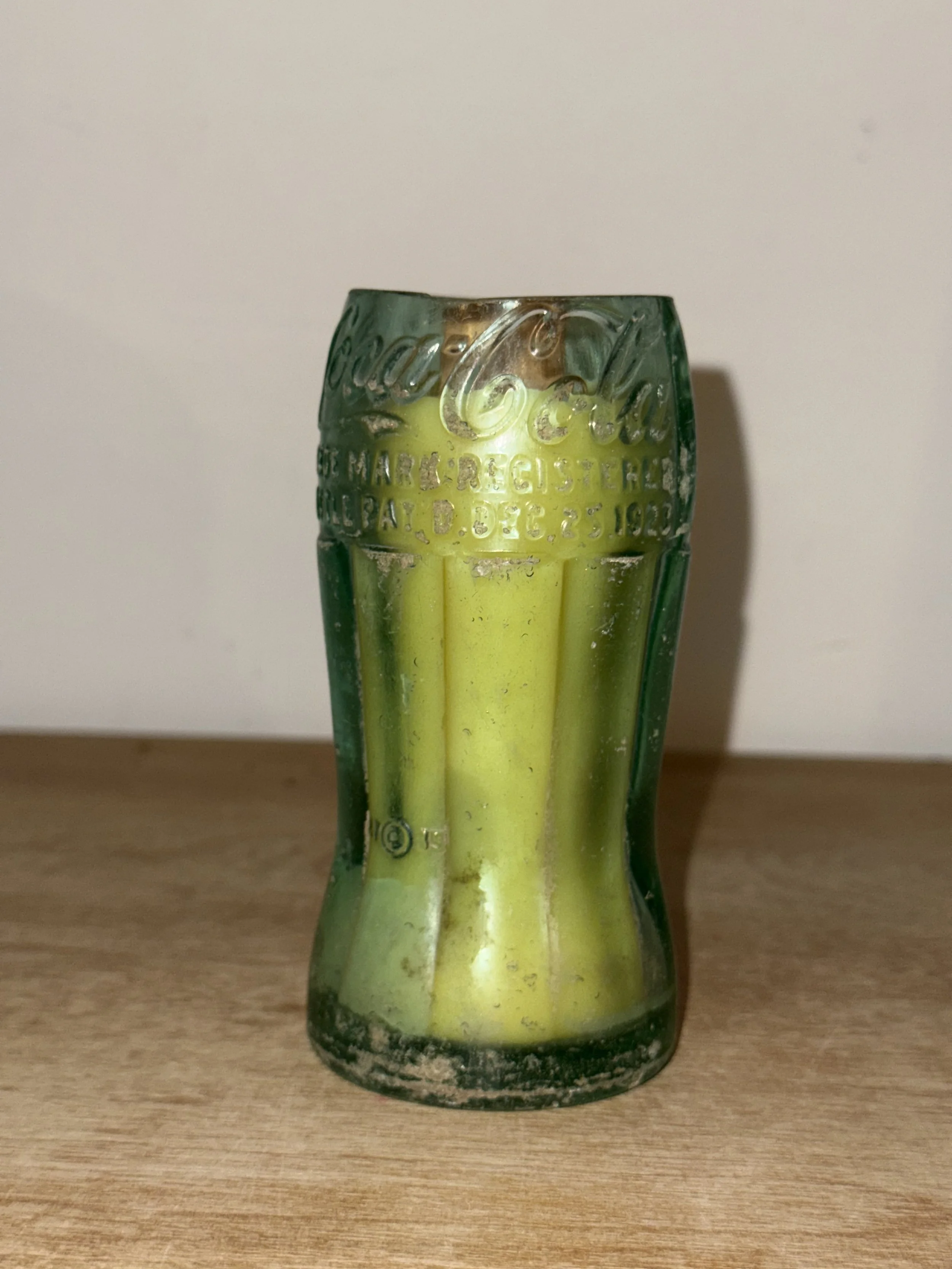
B6- HobbleSkirt- Christmas coke- 1923 Pat- Madisonville Texas
This is perhaps the most iconic American bottle design of all time. A genuine "Christmas Coke" bottle from Madisonville, Texas.
Here is the story behind this specific bottle and why collectors love them:
Why is it called a "Christmas Coke"?
Collectors call this the "Christmas Coke" because of the patent date embossed on the side: "DEC. 25, 1923."
The Patent: The original design for the contour "hobbleskirt" bottle was patented in 1915. When that patent was about to expire, the Coca-Cola Company renewed it. The renewal was granted on Christmas Day, 1923.
The Design: This bottle features the classic "Hobbleskirt" or contour shape, which was designed so you could recognize a Coke bottle in the dark just by touch, or even if it was broken on the ground.
Dating Your Bottle (It wasn't made in 1923!)
Even though the bottle says "1923," it was almost certainly manufactured later.
Production Years: Bottles with the "1923" patent date were actually produced between 1928 and 1938. Before 1928, the bottles carried the "Nov. 16, 1915" patent date.
The Replacement: In 1938, the mold was changed to read "PAT. D-105529," so your bottle definitely predates 1938.
Summary: This bottle was likely filled with Coca-Cola in Madisonville sometime during the Great Depression (1928–1938).
The Huntsville, Texas Connection
The city name on the bottom— Madisonville, TEX—
Small Town Rarity: Bottles from small-town bottling plants are often harder to find than those from major cities like Houston or Dallas because fewer of them were made.
The Plant: Local bottling works were community staples. In the 1920s and 30s, the "Coca-Cola Bottling Company" in a town like Madisonville would have been a locally owned franchise, washing and refilling these heavy glass bottles over and over again for the local area.
Timeline: The Madisonville plant was one of hundreds of small, independent bottling franchises established across Texas starting in the early 1900s. The town's access to the railway would have been critical for receiving the syrup, empty bottles, and bottling machinery.
Ownership Model: The parent Coca-Cola Company (in Atlanta) sold concentrated syrup to local, independent businessmen who owned the bottling plants. These local owners had the exclusive right to bottle and distribute Coke within a specific territory around Madisonville ( and parts of surrounding counties).
The Process:
The local owner received the syrup in wooden barrels or cans.
They mixed the syrup with treated, carbonated local water.
The bottles—like the "Christmas Coke" contour you have—were washed, sterilized, filled, capped, and then sent out for distribution via horse-drawn wagon or early trucks.
The Bottle's Role: Since the bottles were so expensive, they were meant to be returned and reused dozens of times. The embossing of Madisonville, TEX on the base served as a clear marker for route drivers to easily sort and return the empty bottles to the correct plant for reuse.
Impact on Madisonville
During the Great Depression (when your 1928-1938 bottle was being produced), the Madisonville Bottling Company was an economic anchor:
Local Jobs: It provided stable local employment for route drivers, fillers, washers, and sorters.
Local Distribution: It was a crucial part of the local economy, distributing to general stores, drug stores, soda fountains, and local dance halls.
The End of the Small-Town Plant
Madisonville's plant, like many small-town operations, eventually succumbed to modernization and consolidation:
Post-WWII Changes: After World War II, distribution networks improved, and the cost of maintaining small, manual bottling lines became less competitive.
Consolidation: Over the 1950s and 60s, the smaller franchises like Madisonville were bought out and consolidated into larger, regional bottling plants located in bigger cities like Waco or College Station/Bryan.
The Bottle's Fate: Once the Madisonville plant closed or merged, their unique embossed bottles were either destroyed, sold off for scrap, or simply ended up in dumps (which is where this one was found!) —which is why the ones that survived are now treasured by collectors.
This bottle represents a time when Madisonville, TX, was a completely self-sufficient hub for its local economy!
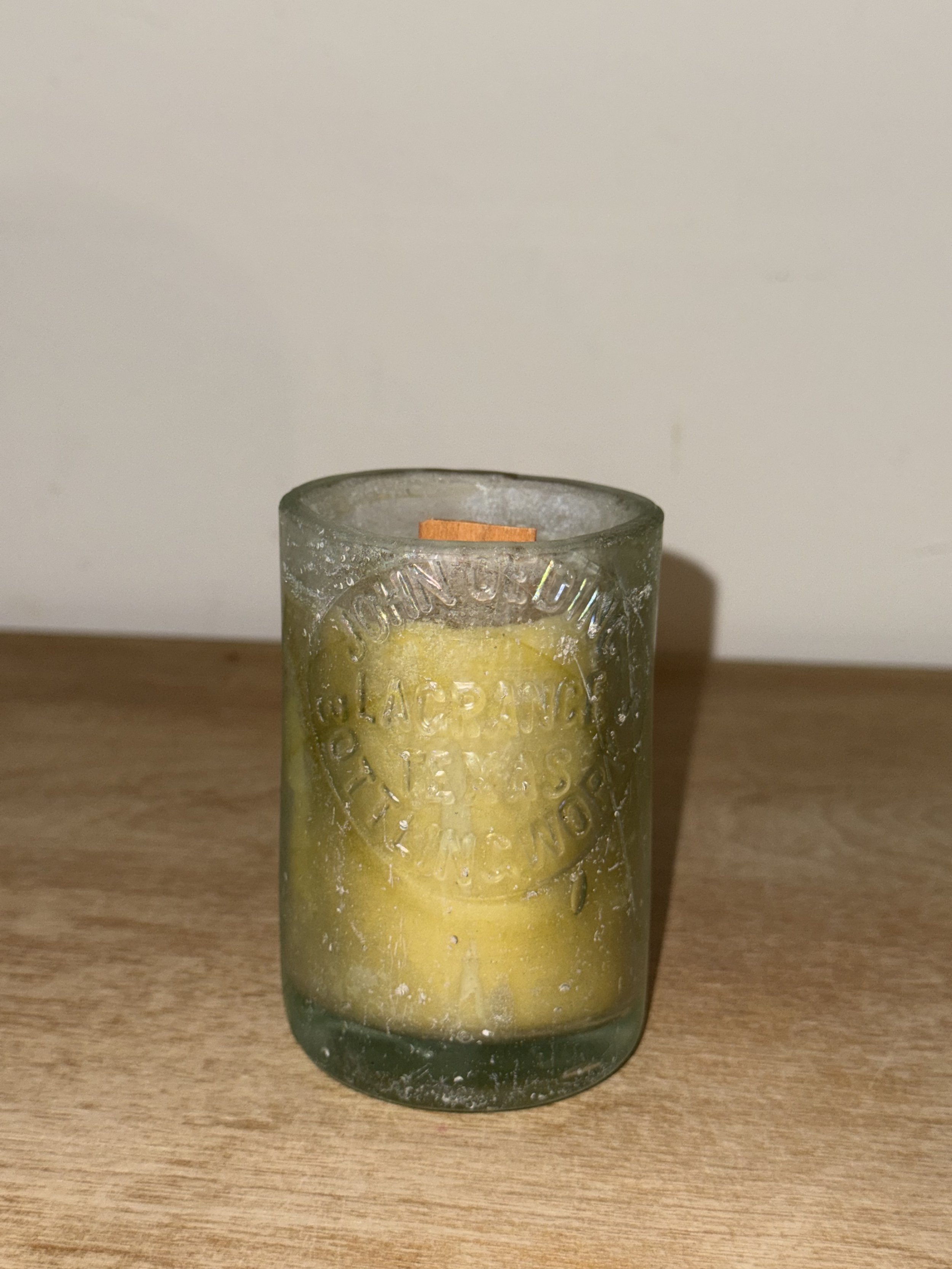
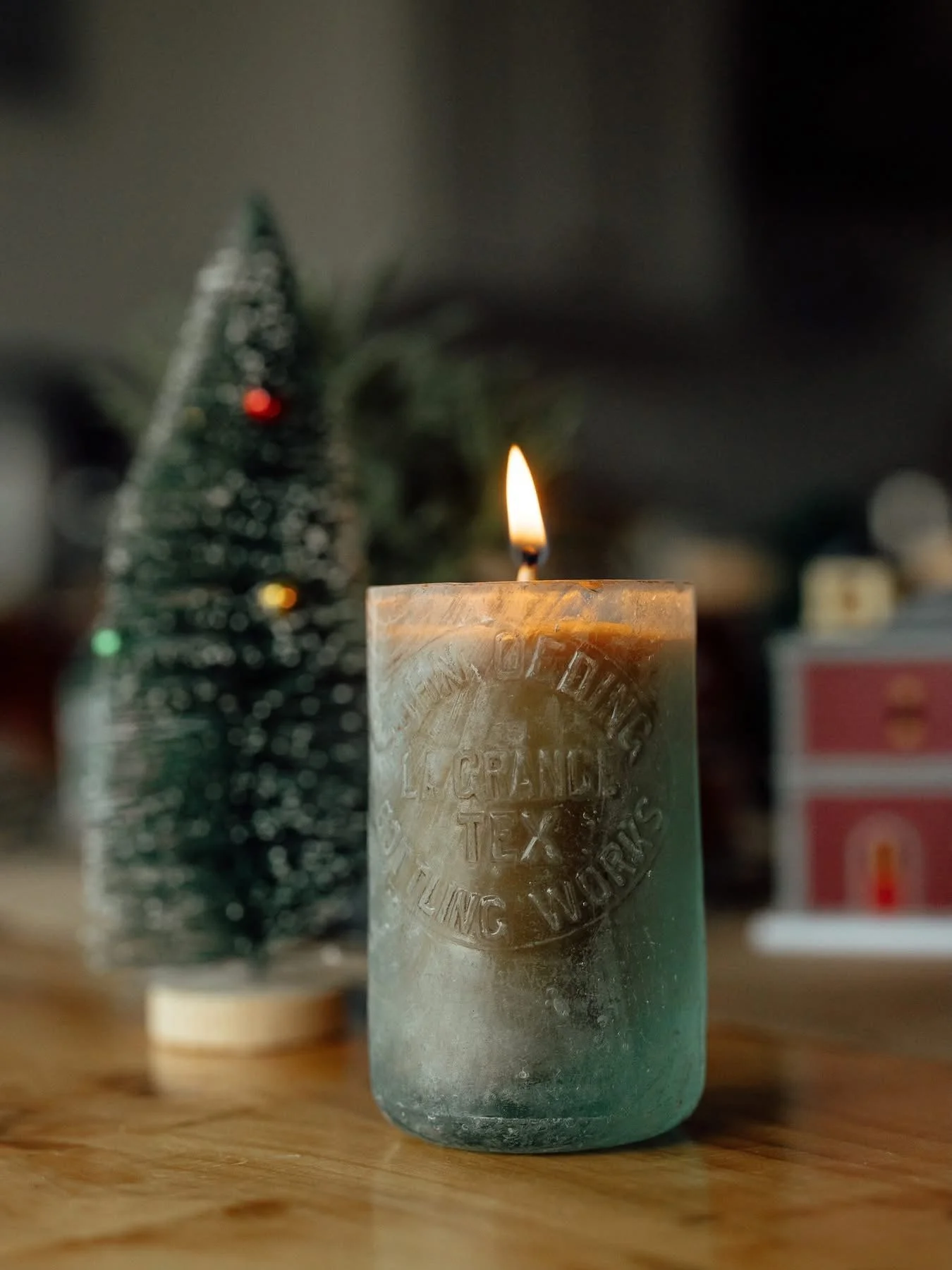
B7- John Oeding - La Grange - QTY 1
The John Oeding Bottling Works
Proprietor: John Oeding was a prominent German immigrant businessman in La Grange, the county seat of Fayette County, Texas.
The Business: Oeding's establishment was primarily a bottling works and often ran alongside a saloon or liquor store.
Products: Bottling Works of this era (late 19th/early 20th century) typically bottled soft drinks (soda water, ginger ale, etc.), mineral water, and sometimes packaged beer or even whiskey.
The Container: The thick, heavy glass and the embossed lettering are characteristic of durable, reusable bottles used for mineral water or soda pop from the era.
Historical Timeline: John Oeding's business was operating in the late 19th and early 20th centuries. The style of this bottle (heavily embossed, thick glass) strongly suggests it dates to the period before Prohibition (pre-1918), or possibly the very early 1920s before the industry fully consolidated.
Estimated Date Range: 1900 – 1918
La Grange and the German Community
Location: La Grange is located in the heart of Texas's German and Czech settlement area.
The Impact: Oeding's operation served as a vital social and economic center for the local community, which relied on such businesses for both refreshment and social gathering. This piece is a tangible connection to the early German-American commercial life of Fayette County.
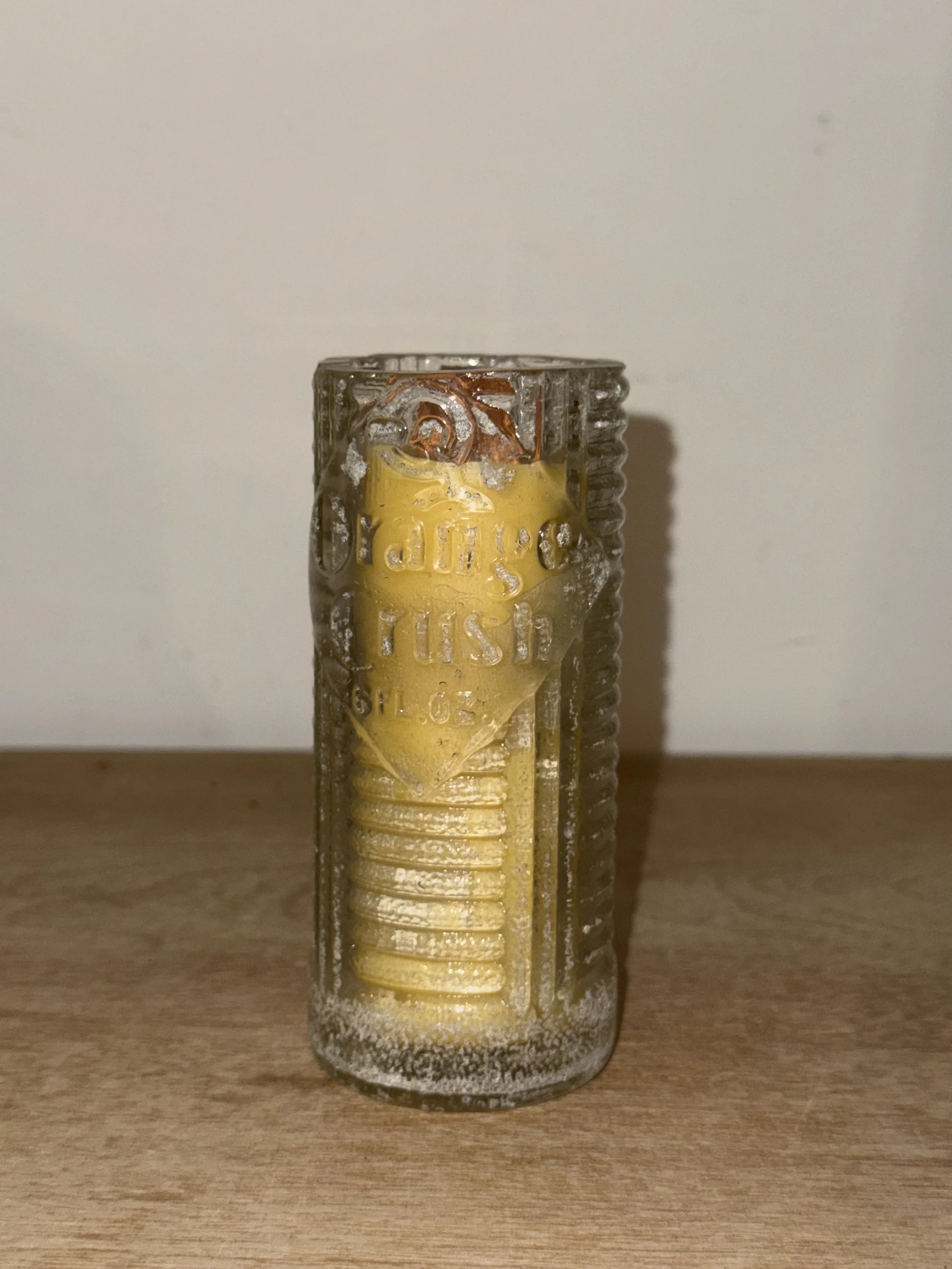
B8- Caldwell Orange Crush- QTY 1
Orange Crush History
This bottle represents one of the earliest and most successful fruit-flavored sodas in the U.S.
The Inventor: Orange Crush was developed by Neil C. Ward in 1916. Ward was a chemist who created a process to mix the soda base without pasteurization, which helped preserve the flavor of the fresh orange oil and pulp.
Launch: The first bottle of Orange Crush was sold in 1916.
The Bottle Design (The Crush Bottle): The unique bottle you have was introduced to match the orange theme. It features a crinkled glass pattern that was meant to evoke the texture of an orange peel and make the bottle instantly recognizable. The label would have covered the center portion, but the sides and top were designed to show the "peel" texture. The bottle also appears to be ribbed or ridged for an easier grip.
The Embossing: Your bottle is embossed with the words "Orange Crush" and likely the patent date, which is partially visible (image
image_cd1b56.pngandimage_cd1b38.png). The words "Pat'd July 13 1920" or similar are common on these early crush bottles.
Dating the Bottle
The distinctive, crinkled "Crush" bottle was phased in soon after the brand's launch and was used throughout the 1920s and 1930s.
Patent Date: If the patent date is July 13, 1920, as is common for this design, then your bottle was manufactured after 1920 and was in circulation throughout the Roaring Twenties and the Great Depression.
Post-1930s: Later in the 1930s and 1940s, Orange Crush, like many soda companies, switched to less distinctive, cheaper bottles (often ACL or painted label styles like your Bulliard's Hot Sauce bottle).
Here is the history that ties your Orange Crush bottle directly to the Caldwell community:
Orange Crush: The Caldwell Connection
Local Franchise Model: In the 1920s and 1930s, it was extremely common for a local soft drink bottler to hold multiple franchises. The Caldwell Coca-Cola Bottling Company would have secured the franchise rights for Orange Crush (and likely other drinks like Lemon Crush or Grape Crush) to maximize their use of the plant and distribution routes.
The Bottle's Journey: This unique, crinkled "Orange Crush" bottle would have been shipped from a glass manufacturer to the Caldwell plant. It was then filled, capped, and delivered to general stores and soda fountains throughout Burleson County, right alongside the Coke bottles you also have.
Unique Branding: The Caldwell plant would have used this distinctive bottle—which was designed to resemble the skin of an orange—to help market the product against competitors in the rapidly growing fruit-soda market.
Dating the Caldwell Crush Bottle
The dates align perfectly with the operation of your "Christmas Coke" bottle:
Design Patent: This crinkled bottle design was often marked with the patent date July 13, 1920 (or similar date).
In Use: The bottle was in widespread use from the early 1920s through the 1930s.

B9- Presun bottle works La grange Texas Henry and Arthur - QTY 5
Presun Bottle Works (also referred to as “Presun / Henry and Arthur / Coca-Cola Bottling Works” in La Grange, Texas):
What it was
The building at 114 S Main Street, La Grange, TX 78945 is the historic site tied to Presun Bottle Works.
Originally constructed c. 1856–1859 by German-Texan stonemasons. It started out as a hotel (“Central Hotel”) until about 1893.
In 1893, a German immigrant named Fritz Presun purchased the building and converted it into a regional sales office for breweries.
In 1897, Presun added a bottling operation — a soda works known as the Crown Soda Factory.
Over time, the business appears as “Presun / Coca-Cola Bottling Works, Henry & Arthur.” A 1915 advertisement mentioned “PRESUN’S means the best in bottled soda-water,” and called the facility “the most modern and most sanitary soda-water factory in South Texas.”
Who — Henry and Arthur
The “Henry” referenced was likely the son of Fritz Presun; the building’s history notes that “his son, Henry, continued the business.”
Presun apparently also sold oil and gas at this address, in addition to operating the bottling works.
The “Arthur” in “Henry and Arthur” is less clearly documented in the sources I found. The 1915 ad simply lists “Henry and Arthur” as names associated with the bottling works.
Thus “Henry and Arthur” probably refers to the operators or proprietors of the bottling business at that time (e.g. family members or partners), but I could not locate a robust record identifying “Arthur” beyond the label on the advertisement.
Historic significance & fate of the building
The building is designated as a historic landmark: in 1983, it received a medallion from the Texas Historical Commission and is recorded as a Texas Historic Landmark.
After its time as a bottling works, the building hosted a variety of businesses — including an insurance agency, architecture firm, antique shop, photography studio, and more.
Bottles stamped with “Presun / Henry and Arthur / La Grange, TX” likely date from the period when that business was active — roughly late 1890s through early 1900s (or possibly into the 1910s/1920s, depending on when exactly the business changed). The 1915 ad confirms the name was in use at least by then.
Because this was a “soda-water factory” and bottling works, such bottles are of interest to collectors and historians of early-20th-century regional soda and soft-drink bottling — offering a tangible connection to local history in South Texas.
WHY Vintage Bottles
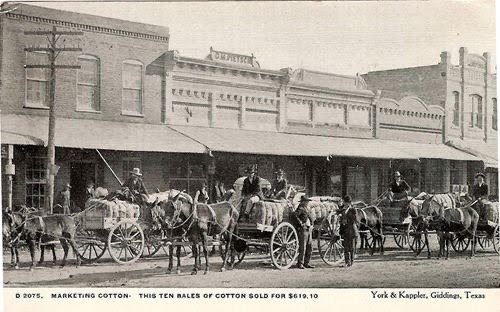
David and I both love history especially local Texas history. This love for history is rooted in our upbringing where we were fortunate enough to spend time with our grandparents and great grandparents learning about their family history which dates to the early days of Texas. Having a love for history is only part of the story though, our family also instilled a desire in us to find things of historical significance. I can still remember times in Lone Grove Texas growing up where we tried to find room for some of Granny O’s sugar cookies after stuffing ourselves with homemade chicken and dumplings and garden raised black eyed peas. After we awoke from the food coma, our uncles would go looking in the plowed field for points or arrowheads and if we were lucky, we could tag along. On one occasion I remember being told to look for something on the ground that was shaped like a Christmas tree. As a parent now, I can only imagine how many Christmas tree like rocks were presented to the uncles from all of the cousins as arrowheads that were nothing more than a rock but, I was lucky enough to find a small bird point and still remember the excitement I had and the astonished look my uncle had that he wasn’t being presented with yet another worthless rock. Since those times David and I still find enjoyment in other forms of history treasure hunting like metal detecting, which started as a Christmas gift from my parents years ago and is still something we each enjoy. Once, when I was younger I remember asking my grandma Orsag if I could metal detect around the old homesite on the property Meagan and I currently live and I was told by my grandma that while I was welcome to try it’s unlikely I would find anything because her family (Drews) didn’t have any money and if they did lose something of value they would have looked until they found it. After spending more time than I would like to admit detecting around the property I can say so far, she appears to have been correct. I’m still trying to prove here wrong though. Also, value isn’t my motivation in looking for this historical treasure. Take a step back from the air-conditioned home you are sitting in right now looking at your phone that’s connected to the internet and think about what the area you are sitting in looked like in 1900. Most of the towns David and I find bottles from were first established in connection to a railroad being built through the town. For example, the town I grew up in Giddings Texas was founded in 1871 with the Houston and Texas Central Railway and this is a picture of what life looked like in early Giddings history.
Its during this time frame that locally embossed glass bottles were being produced and many towns had bottling works or local pharmacies (druggist) that would have bottles manufactured with their business name molded into the glass. The bottling works would receive the embossed bottles and fill them locally with a variety of different flavoring options and the local druggists would fill the bottles with “medicine” to cure a variety of ailments. Many of these supposed cures were primarily alcohol while others included cocaine or morphine in such high doses that they themselves could cause serious health concerns.
The bottles we find with local names date to the 1920s but some examples date back into the 1800’s and are incredible examples of Texas history!
Some of you may wonder….How do you find these bottles? In those days dragging your trashcan to the side of the road to be picked up once a week was not a thing. Instead, most trash was burned or dumped on the property somewhere. If the trash pit on your property filled up or you didn’t want to dump your trash next you’re your house another option was a drainage area near by or a creek. Horse drawn wagons carrying wood barrels filled with trash would be backed up to a embankment of a creek and the barrels would be pushed over the edge. The beautiful thing about pushing a barrel into a creek is the next hard rain your trash might magically disappear . One last area where we have had luck finding older bottles is an old privy. What’s a privy? Well… Before indoor plumbing every house would have an outdoor bathroom near the home with a hole dug into the ground. Among the things dropped into those holes were bottles they needed to dispose of. I know that seems… lets call it interesting but after 100 years you aren’t digging through what you might imagine. David and I work to locate these areas in public spaces or through permissions from landowners in an effort to find history but as you might imagine after rolling around in a creek for 90 years or being dropped into a privy hole these bottles are often damaged. These damaged bottles would generally be discarded again or left but since that hurt my heart, Meagan suggested we combine two of our passions and cut the broken bottles and fill them with Texas Beeswax to create candles. That seems like a great way to share history with others in a way is both unique and functional. All of that said… Here are some of the bottles we have found an a brief history of the bottles. Keep in mind that these bottles are not in perfect condition but which of us are :). I do my best to ensure there are no sharp edges through grinding the surfaces after cutting them but please use caution.